Block #1
Previous00000000
Fingerprint
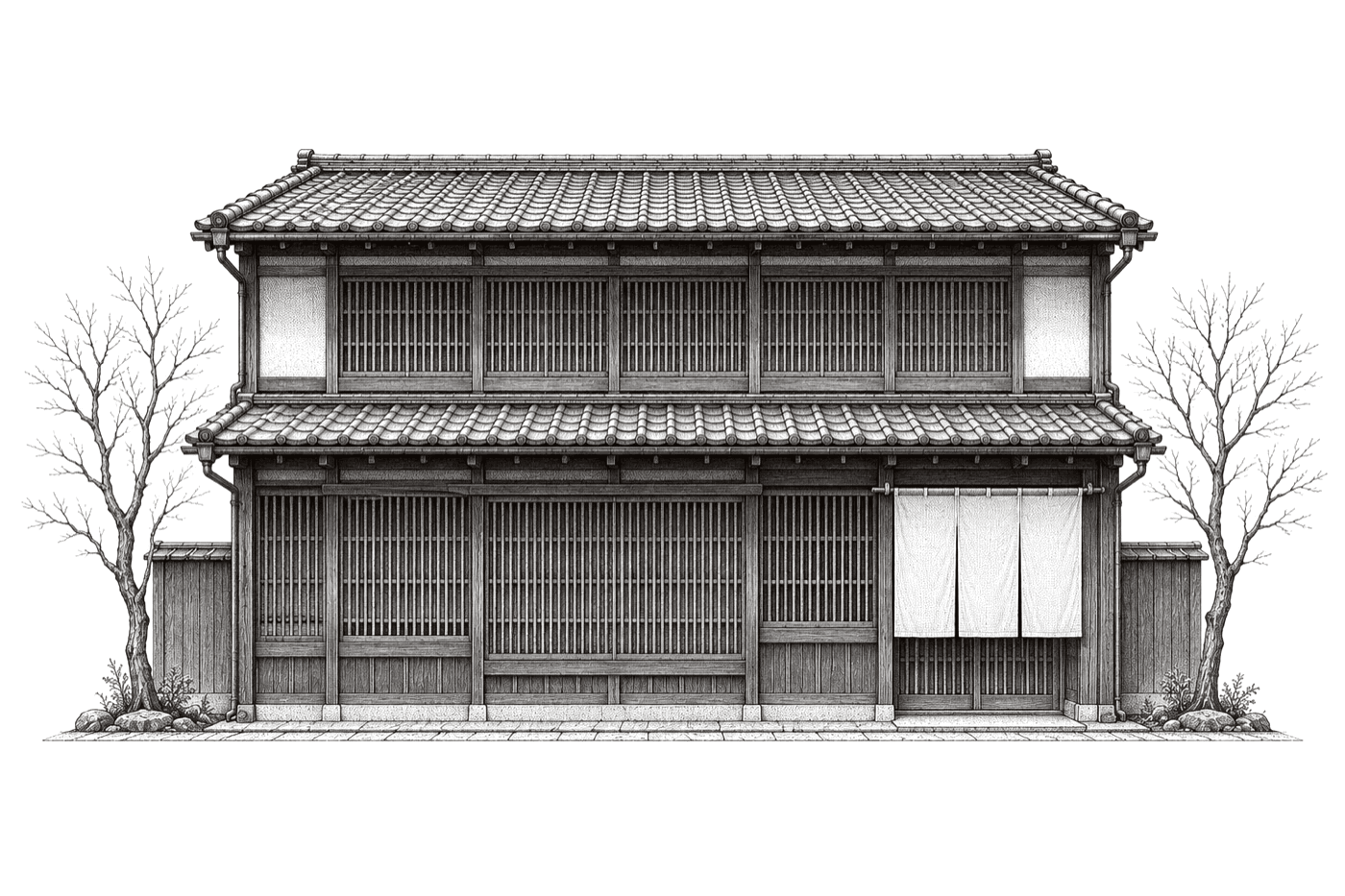
FIG. 02
木組 KIGUMI · JOINERY
ISOMETRIC
SCALE 1:5

The path / Station 01
[01 / 06] 学 MANABU · LEARNING
A shared ledger that nobody owns alone – explained with a Japanese wood joint.
From history
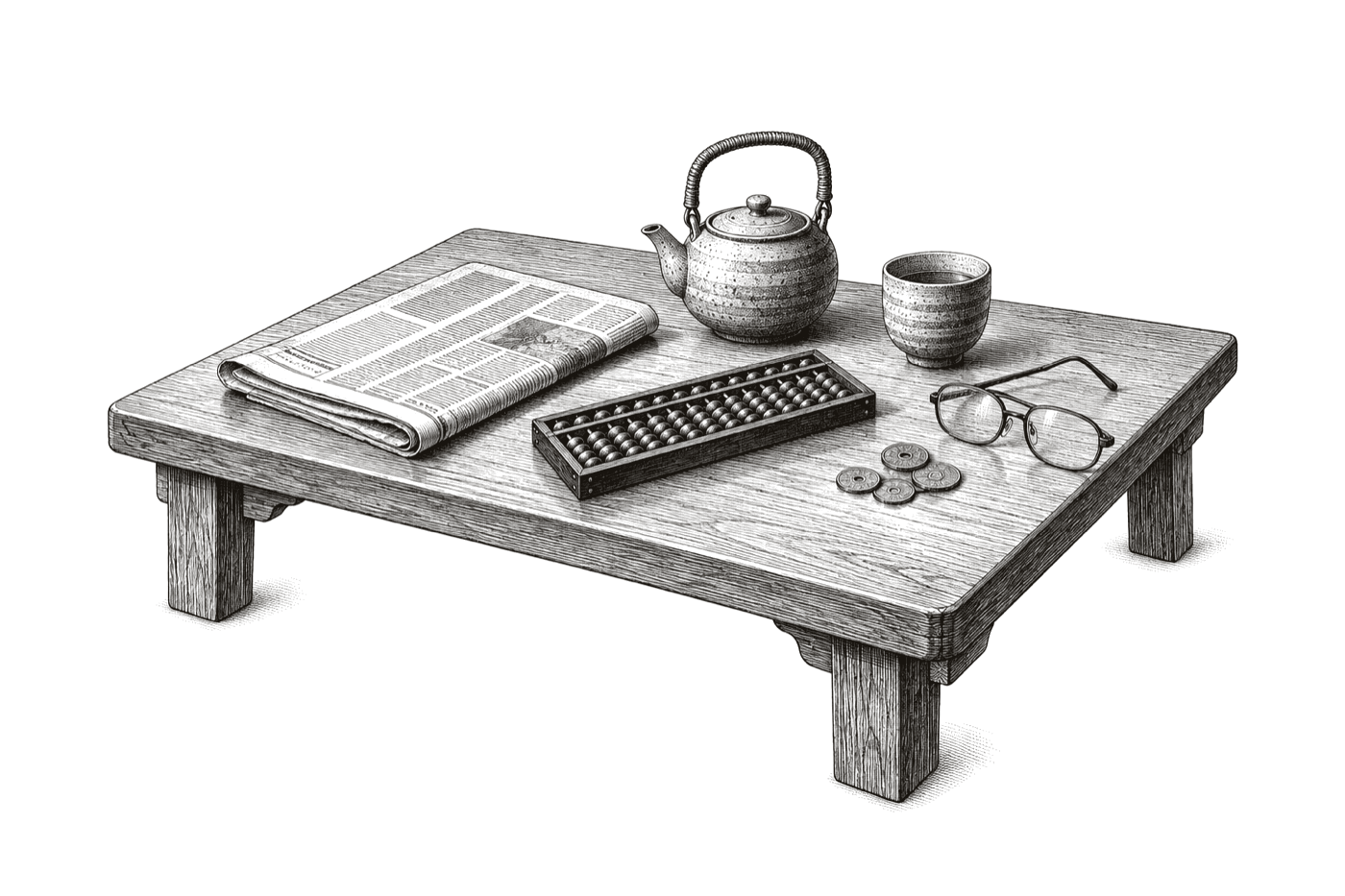
At the kitchen table, Mrs. Watanabe works out her sums on the soroban and writes every expense into her household ledger, the kakeibo. It’s her book: she alone decides what goes in it – and she could change any entry afterwards.
A blockchain turns this idea on its head. The book isn’t held by one person but by thousands at the same time. An entry only counts once the majority confirms it – and after that it can’t be changed without someone noticing.
教訓 Lesson
Trust doesn’t come from one person, but from many people checking the same book.
Lesson 01.2
Every transfer goes through the same four steps. At the end it sits in a block that is firmly connected to all the blocks before it.
Someone sends an amount to an address.
Many computers in the network check whether the transfer is valid.
Valid transfers are bundled into a block.
The block carries the fingerprint of the one before – like a tenon in wood.
Experiment
Every block has a fingerprint, calculated from its content and the fingerprint of the previous block. Change an entry below and see what happens.
Block #1
Previous00000000
Fingerprint
Block #2
Previous
Fingerprint
Block #3
Previous
Fingerprint
Block #4
Previous
Fingerprint
All blocks fit together.
Simplified fingerprint for learning purposes. Real blockchains use cryptographic methods – and to re-link a chain, you’d have to control the majority of the network.
The book is held by many at once. There’s no single place that controls everything.
In everyday lifeNo bank counter that can close
Confirmed entries can’t be changed without someone noticing – the experiment just showed you that.
In everyday lifeMistaken transfers can’t be reversed
Every transfer can be viewed publicly – not the name, but the address and the amount.
In everyday lifeEvery block can be looked up in a block explorer
What we offer
We teach the basics of cryptocurrencies and blockchain – hands-on and matched to your level of knowledge. No financial advice, but plenty of practice.
| Format | Who it’s for | Content |
|---|---|---|
| [01] | IndividualPrivate individuals who want to get started at their own pace | Pace and topics shaped by your questions |
| [02] | TeamsCompanies and departments | The basics, plus how they relate to your business |
| [03] | GroupsClubs, schools, anyone interested | Basics, wallet, first transaction |
No. This station and our beginner training sessions assume nothing – just curiosity.
No. Bitcoin is the first application to use a blockchain. Today the technology itself is found in many other networks too.
The chain itself is very hard to change. Attacks usually hit everything around it: insecure wallets, fake websites or faulty programs.
No. We explain how the technology works so you can decide for yourself. We don’t give buy recommendations.
Wrap-up
You now know what a blockchain is and why it can’t simply be changed.
試験 SHIKEN · Quiz · 3 questions
Three short questions on station 01. Get them all right and the station is complete – then you move on.
[1/3]At its core, what is a blockchain?
[2/3]What happens if someone changes an old block after the fact?
[3/3]Which three qualities define a blockchain?
済
Passed! Station 01 is marked as complete on your path map.
Get to know us in a free intro call. We listen, put things in context and show you the next step – without any buy recommendation.
Intro call →